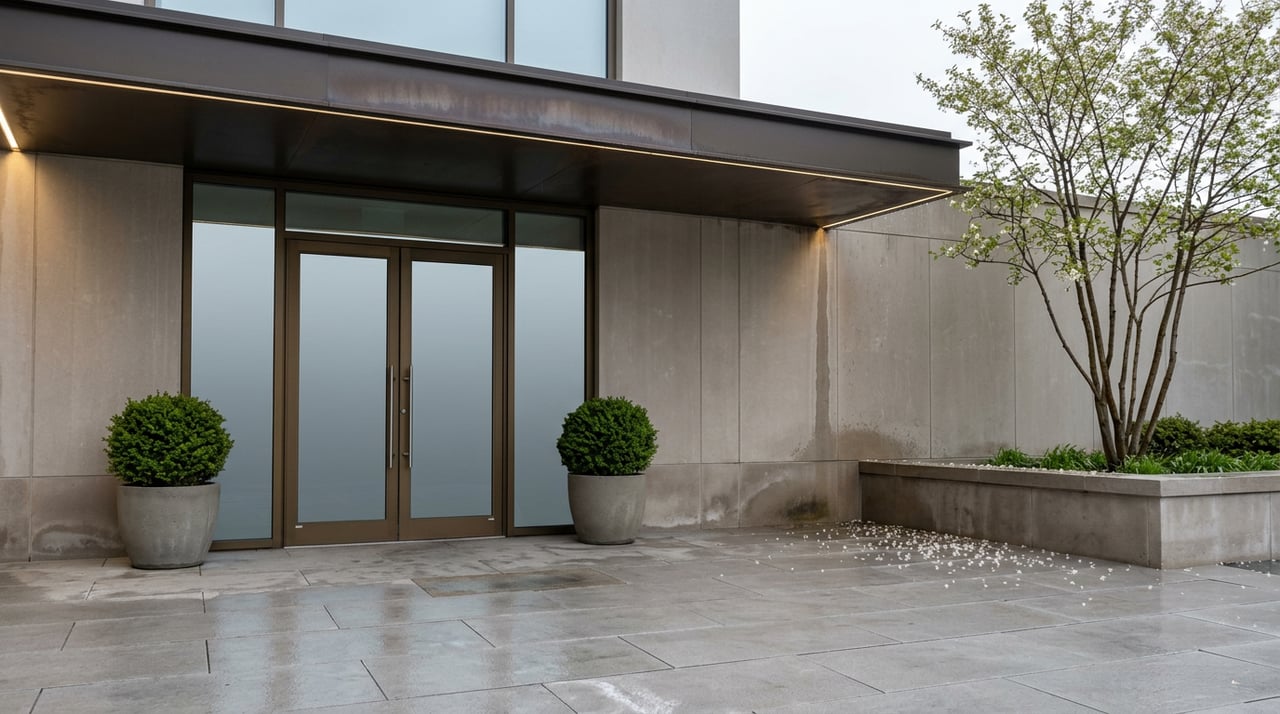
In Hoboken, "Parking Included" Can Mean Three Very Different Things. Only One Is Actually Yours.
If a Hoboken listing tells you parking is included, what exactly did the seller just promise you?
That question sounds simple until you start shopping. In Hoboken's condo market, "parking included" can mean a deeded space you own outright, an assigned spot the homeowners association controls, or nothing more than eligibility to apply for a city permit that lets you compete for a spot on the street. Those three things sit at wildly different price points and carry wildly different guarantees, and the listing sheet rarely tells you which one you're getting. Sort that out before you write an offer, not after you've closed.
Start with the cheapest option, because its price is the whole story. As of June 1, 2026, Hoboken's Parking Utility charges $95 a year for a resident's first vehicle, $200 for a second, and $300 for a third. That's a modest increase from the prior schedule, and it still leaves the permit remarkably inexpensive for a city this dense.
There's a reason it stays cheap. The city's own parking FAQ says the cost of a resident permit is subsidized by roughly 90 percent to keep residential parking affordable, and it says plainly that this results in more cars parking on-street and more competition for a limited number of spaces. In other words, the low price isn't an oversight the city is slowly correcting. It's the policy. Hoboken has decided that keeping the permit cheap matters more than reducing how many people compete for curb space, and every renewal cycle since has confirmed that choice.
The math on the other end backs this up. Hoboken Girl, the city's longtime local lifestyle publication, has reported that Hoboken has fewer than 10,000 on-street parking spaces against nearly 15,000 issued permits. A resident permit, then, isn't a parking spot. It's a raffle ticket that costs less than the price of a nice dinner out and lets you keep entering the drawing every night for a year.
So when a listing says "permit eligible" or simply "street parking," read that as: the unit qualifies you to compete for a spot, not to have one. If you're coming from a place where a parking permit functions like a lease, that's the gap that catches buyers off guard.
Once you move past street parking, the guarantees get stronger and so do the price tags. Here's how the three tiers actually compare.
| Parking Type | What It Costs | What It Guarantees |
|---|---|---|
| On-street resident permit | $95 to $300 per year, per vehicle | The right to compete for a spot. No assigned space, no reserved curb. |
| Monthly garage space | Roughly $175 to $450 per month, depending on location and whether the space is covered or reserved | A place to park, contracted month to month or by lease term. Rates and terms can change with notice. |
| Deeded parking space | Roughly $25,000 to $75,000 added to the condo's purchase price | An owned asset tied to the unit's deed. This is the only tier you actually own. |
Run the annual math and the gap becomes obvious. A monthly garage contract at $175 to $450 runs $2,100 to $5,400 a year, guaranteed. A resident permit costs a small fraction of that and guarantees nothing. The permit isn't a bargain version of the garage. It's a different product entirely, priced low because the city built it to be low, not because it does the same job for less.
The deeded space sits on the opposite end. It's the one line item in Hoboken parking that behaves like real estate rather than a monthly bill, because it is real estate. It transfers with the deed, it appreciates or depreciates with the building, and it's yours to sell, rent, or leave empty. Whether that premium makes sense for you comes down to how long you plan to stay and what a comparable garage contract would cost over the same stretch. For someone settling in for five years or more, the arithmetic usually tilts toward owning the space rather than renting it month after month.
Building type matters here too. Hoboken's older brownstone stock typically has no garage access at all, which pushes those buyers toward street permits or a monthly contract nearby. The city's newer high-rise buildings are more likely to include deeded underground parking as part of the building's original construction, which is one reason those units often carry a different price ceiling than a comparable brownstone floor-through a few blocks away.
None of this is a reason to avoid a Hoboken condo. It's a reason to ask sharper questions before you make an offer, because the listing description alone won't settle it.
The June rate increase didn't fix the scarcity problem, and it wasn't designed to. Even at $95 to $300 a year, the permit remains a small fraction of what a guaranteed garage contract costs annually, which means the same competitive dynamic that existed before the increase is still fully in place. If anything, the increase is a useful reminder that permit pricing is a policy lever the city adjusts occasionally, while the actual supply of curb space stays fixed. A buyer evaluating a listing today should treat any past year's parking situation as a snapshot, not a promise, and confirm the current rules before assuming last year's convenience carries forward.
Does a deeded parking space always transfer automatically when the condo sells? It should, since it's recorded as part of the unit's ownership, but confirm this in the deed itself and don't rely on the listing description alone. Ask your attorney to verify the parking space is specifically referenced in the recorded deed before closing.
If a listing just says "parking included" without specifying the type, what should I do? Ask the listing agent directly whether the space is deeded, HOA-assigned, or a street permit, and request documentation. This single question resolves most of the ambiguity before you're far enough into a transaction for it to matter.
Can I count on getting the same street parking permit access as the current owner? Not automatically. Resident permits are tied to your own documented residency and vehicle registration, not to the unit's history. A prior owner's parking convenience says nothing about your future access to the same curb.
Parking in Hoboken is one of those details that looks minor on a listing sheet and becomes very real the first week you're circling the block at 9 p.m. Sorting out which tier you're actually buying, before you're under contract, is the difference between a pleasant surprise and an expensive one. If you're weighing a Hoboken condo and want a second set of eyes on exactly what a building's parking arrangement really guarantees, Alena Ciccarelli Properties can walk through the deed language, the HOA rules, and the real math with you before you make an offer.
Explore my latest insights, market trends, tips, and updates on real estate.

Whether you’re buying or selling, Alena Ciccarelli delivers exceptional service, local expertise, and a client-first approach that makes your real estate journey seamless and rewarding. If you want to get the highest value for your home, contact Alena for a free consultation!
Alena Ciccarelli
1412 Washington St Hoboken, NJ, 07030