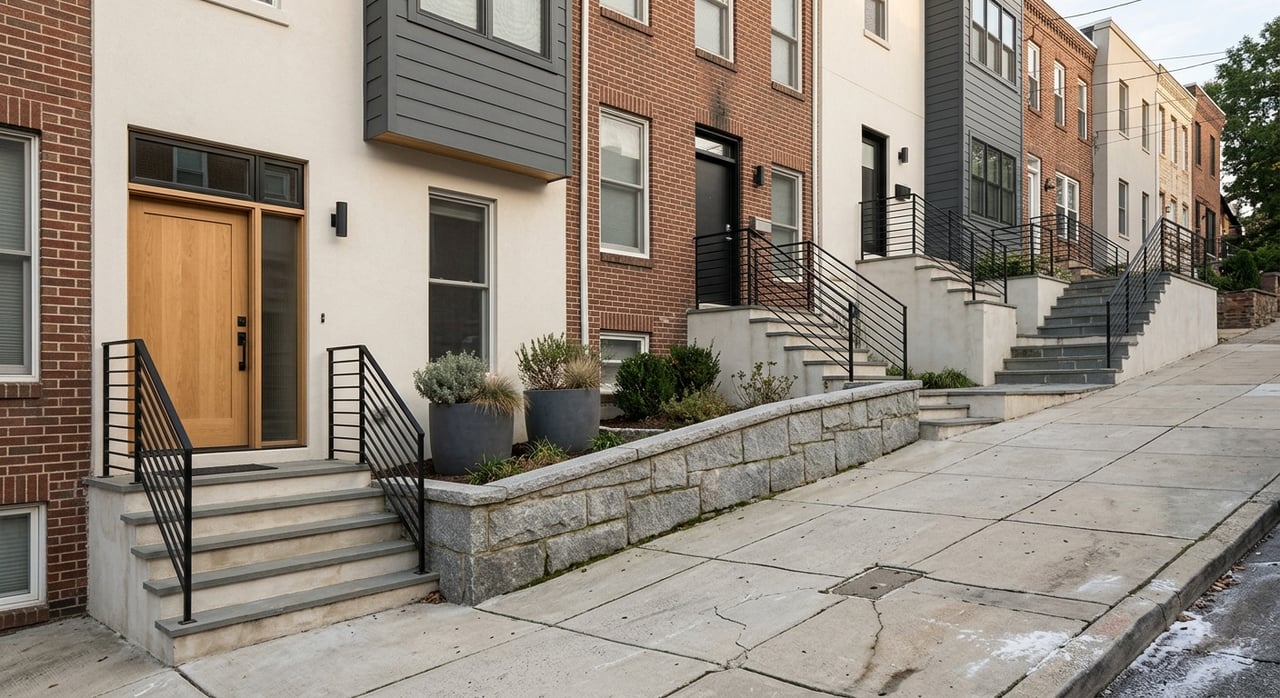
Living on Weehawken Waterfront vs. the Hillside
Looking for a place that gives you skyline views, waterfront access, and a more layered neighborhood feel than many nearby Gold Coast towns? Weehawken stands out because everyday life here can look very different depending on whether you live along the river or higher up near Boulevard East and Palisade Avenue. If you are considering a move, an investment, or a sale in Weehawken, understanding that split can help you make a smarter decision. Let’s dive in.
Weehawken is compact, but it does not live like a one-note waterfront town. According to the 2020 Census, the township had 17,197 residents packed into just 0.78 square miles, which creates a dense, urban feel overall. At the same time, the local zoning pattern includes everything from one-family homes and townhouses to multi-family buildings and high-rise waterfront districts.
That mix shapes daily life in a very real way. Along the waterfront, you will find larger residential buildings, riverfront paths, and transit options centered on Port Imperial. Up the hillside, the setting shifts toward neighborhood streets, smaller parks, and overlook-style public spaces that give Weehawken a more layered identity.
For many buyers, the waterfront is the first image that comes to mind. This part of Weehawken is closely tied to Port Imperial and Lincoln Harbor, where the lifestyle often centers on the river, views, and quick commuter access. If your ideal routine includes stepping outside to a promenade or heading to the ferry in minutes, this section of town will likely feel compelling.
Waterfront Park and Recreation Center is one of the biggest everyday amenities in this area. Located at 1 Port Imperial Boulevard, it includes two playgrounds, the Hudson River Walk, a turf soccer field, two softball fields, a track, three tennis courts, and a workout area. It is open daily from 7 a.m. to 10 p.m., which makes it useful for both early-morning workouts and evening walks.
You also have Weehawken Pier, which extends 450 feet into the Hudson and includes seating and lighting. Nearby Lincoln Harbor Park adds to the public open space network along the river. Together, these spots create a waterfront rhythm that feels active, scenic, and easy to enjoy without planning your whole day around it.
If you live near the river, your routine may feel built around access and convenience. The setting supports walks along the Hudson, casual time outdoors, and a commute pattern that is closely tied to ferry and light rail service. Dining in this area also tends to include more destination-style waterfront restaurants.
Local examples include Drift in Lincoln Harbor, Blu on the Hudson at 1200 Harbor Boulevard, Molos at 1 Pershing Road, and The Highwood on the waterfront. These locations help give the area an energetic, polished feel, especially in the evenings and on weekends.
The hillside tells a different story. Here, Weehawken feels less like a pure waterfront district and more like a neighborhood with its own rhythm, shaped by elevation, smaller parks, and local commercial streets. If you want a setting that still connects to the Gold Coast but feels a little more tucked into the township itself, the hillside often offers that balance.
Old Glory Park at 51st Street and Boulevard East is one of the clearest examples. It offers benches and views of New York City and the Hudson River, making it more of a pause-and-take-it-in kind of place than a sports-focused recreation hub. Reservoir Park on Palisade Avenue adds sitting areas and a walking path, supporting the quieter side of daily outdoor life.
Life uphill often feels more tied to neighborhood routes and local stops. Restaurants like Hi-So Thai on Willow Avenue and Rotisserie on Park on Park Avenue reflect the inland side of Weehawken’s dining scene, where everyday convenience can play a bigger role than destination appeal. That can be especially attractive if you want your errands, meals, and walks to feel part of a regular neighborhood routine.
This is also where Weehawken’s housing variety becomes easier to appreciate. The township’s zoning allows one-family, one-, two-, and three-family homes, townhouses, and multi-family properties, so the housing conversation is not limited to high-rise condo living.
Transportation is one of the biggest reasons people look closely at Weehawken. The township functions as a ferry-and-light-rail node more than a PATH-centered hub, which gives it a distinct position on the Gold Coast. For some buyers, that is a major advantage.
Port Imperial Station on the Hudson-Bergen Light Rail is accessible and includes bike racks or lockers as well as ticket vending machines near the bus drop-off area. NY Waterway’s Port Imperial terminal offers all-day Midtown service to W39th Street, weekday Downtown service, and trips as short as 8 minutes. The terminal also has indoor parking and connections to NJ TRANSIT bus routes 156R, 158R, 159R, and HBLR.
If your schedule depends on reaching Manhattan efficiently, those options can shape where in Weehawken you want to live. A waterfront address may put you closer to ferry service, while a hillside address may give you a different neighborhood feel while still keeping broader transit access within reach.
One of the most important things to understand about Weehawken is that it is not a single-price market. It has a strong condo and multi-unit presence, but there is meaningful range within that. That matters whether you are buying your first local property, moving up, downsizing, or evaluating an investment.
Census Reporter’s ACS 2024 profile shows 9,563 housing units in Weehawken, with about 86% in multi-unit buildings. QuickFacts reports a 30.4% owner-occupied rate, a median owner-occupied value of $889,000, a median gross rent of $2,500, and that 85% of residents lived in the same home a year earlier.
Current market snapshots also show a broad spread. Zillow’s home value index places Weehawken at $883,170 as of June 30, 2026. Realtor.com reports a median listing price of $1.124 million, while Homes.com reports a median condo price of $949,000 and a condo range from $199,000 to $5,250,000.
For buyers, Weehawken offers options across several tiers rather than one fixed entry point. Current inventory examples cited in the research include a $335,000 studio condo, a $459,000 condo, waterfront condos above $1 million, and a pending home priced at $2.95 million. That range can create opportunities for very different goals and budgets within the same township.
For sellers, that means positioning matters. A waterfront condo, a renovated inland unit, and a larger home or townhouse may all attract different audiences, even though they share the same town name. In a market like this, presentation, pricing strategy, and neighborhood-specific storytelling can make a measurable difference.
Many buyers compare Weehawken with nearby Hoboken and Edgewater, but the lifestyle is not exactly the same. Hoboken is much denser, with 60,419 residents in the 2020 Census and 48,335.2 people per square mile. Its transportation identity is also broader, with PATH, ferries, light rail, buses, and the Hop shuttle all playing visible roles.
Edgewater, by contrast, is more organized around River Road, the marina, the ferry landing, and shuttle connections tied to ferry departures. Weehawken sits somewhere between those two models. It has notable waterfront living and fast ferry access, but it also has reservoir, boulevard, and Palisade Avenue addresses that keep the hillside central to the town’s identity.
That layered geography is what gives Weehawken its appeal. You can find a more riverfront-oriented routine or a more neighborhood-oriented one, often within the same small township.
If you are deciding where you fit in Weehawken, start with how you want your day to feel. Do you want to be close to the ferry, waterfront parks, and larger condo buildings? Or do you prefer a more tucked-in neighborhood setting with smaller parks, hillside views, and a different housing mix?
Neither choice is better across the board. The right fit depends on your commute, budget, housing preferences, and how you want to use the neighborhood day to day. In a place as layered as Weehawken, those details matter more than a simple map search might suggest.
Whether you are buying, selling, renting, or looking at an investment opportunity in Weehawken, local context can help you see value more clearly. For tailored guidance on Weehawken’s waterfront and hillside market, connect with Alena Ciccarelli.
Explore my latest insights, market trends, tips, and updates on real estate.
Whether you’re buying or selling, Alena Ciccarelli delivers exceptional service, local expertise, and a client-first approach that makes your real estate journey seamless and rewarding. If you want to get the highest value for your home, contact Alena for a free consultation!
Alena Ciccarelli
1412 Washington St Hoboken, NJ, 07030