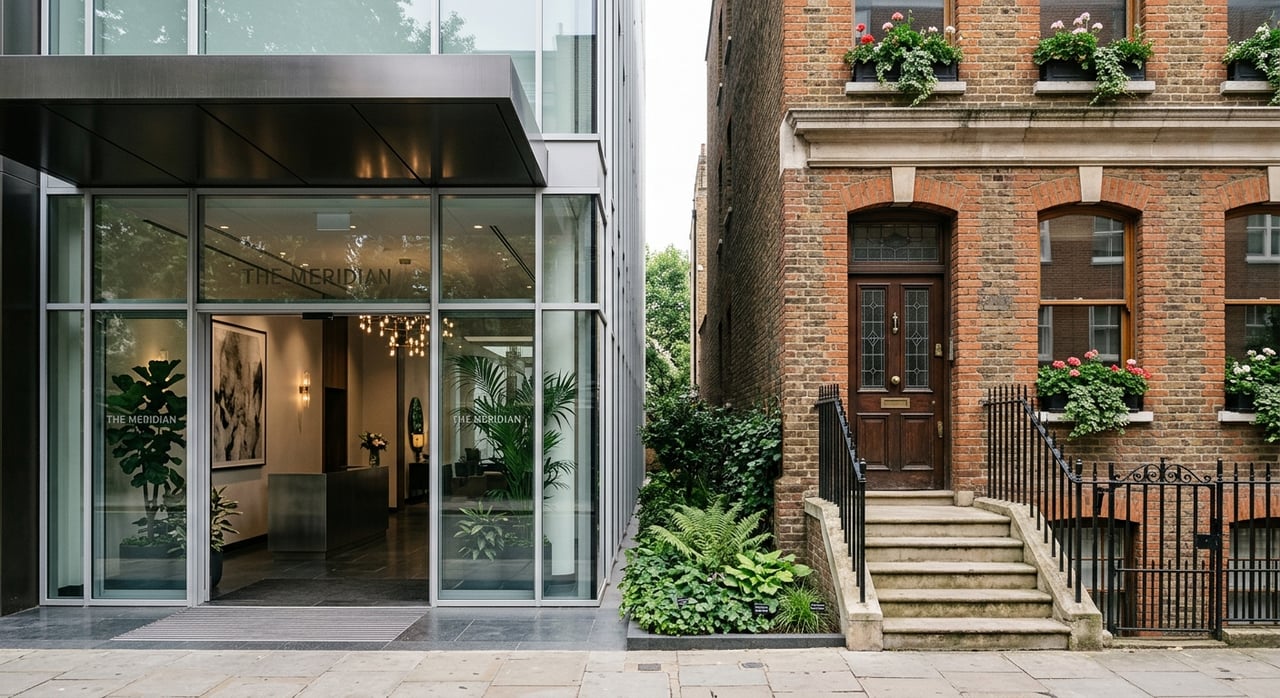
North Bergen High-Rise vs Walk-Up: Pros, Cons & Fit
Trying to choose between a high-rise and a walk-up in North Bergen? It sounds simple at first, but the right answer depends on how you live every day, what monthly costs you can comfortably carry, and which tradeoffs matter most to you. In a dense township where multiunit buildings are a major part of the housing mix, your building choice can shape everything from your commute to your grocery runs. Let’s break down the pros and cons so you can make a smart, confident decision.
North Bergen is a compact, densely populated township with an estimated 61,483 residents spread across 5.14 square miles. That density helps explain why condos and other multiunit buildings play such a central role in the local market. If you are shopping here, comparing building types is not a side issue. It is a core part of the decision.
North Bergen also has a strong waterfront and transit story. The Hudson River Waterfront Walkway reaches the township’s northern end, and the area is shaped in part by height regulations in waterfront districts. NJ Transit’s Hudson-Bergen Light Rail serves North Bergen at Tonnelle Avenue and Bergenline Avenue, and all HBLR stations are accessible, which adds another layer of convenience for buyers who prioritize commuting options.
For many buyers, the biggest benefit of a high-rise is simple: elevator access. If you do not want to carry groceries, strollers, packages, or furniture up multiple flights of stairs, that can be a major quality-of-life upgrade. It can also make daily routines feel easier and more predictable.
This matters even more in a dense, fast-moving area like North Bergen. When you are balancing work, commuting, and city life, a building with easier access can feel more turnkey. That convenience is one reason high-rises continue to attract buyers who want a low-friction lifestyle.
High-rise condos often come with more shared services than smaller buildings. Fannie Mae notes that condo fees commonly cover exterior maintenance, common areas, water, sewer, trash, and recreational amenities. For some buyers, that bundled structure creates a more streamlined ownership experience.
That can be especially appealing if you prefer a building that feels managed and organized. You may also find features like on-site parking or common amenities that are harder to find in smaller properties. While every building is different, the broader appeal is often convenience and service.
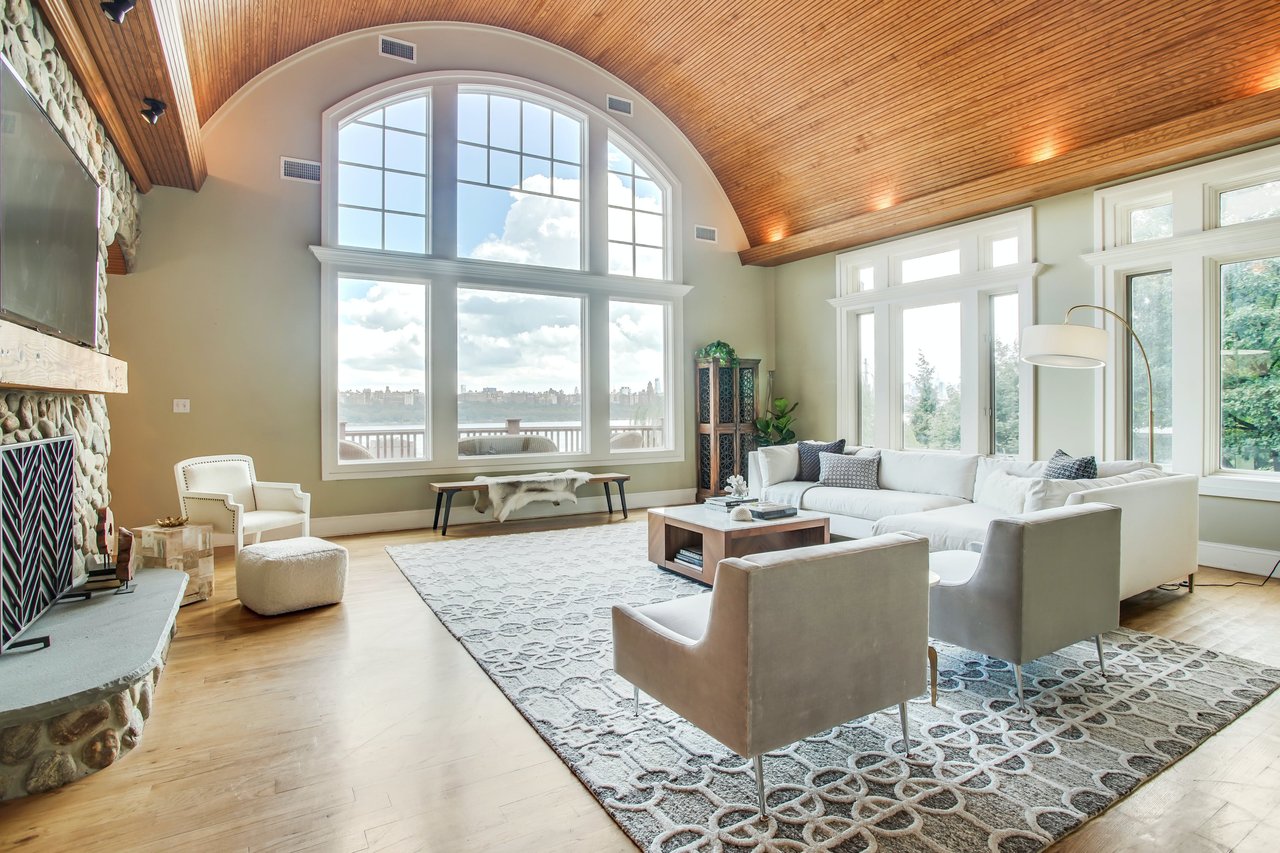
In parts of North Bergen, height can be a real lifestyle feature. The township’s waterfront context and development pattern make views especially relevant in certain locations. Depending on the building and unit, a higher floor may offer a broader outlook toward the Hudson River, the skyline, or surrounding areas.
For some buyers, that is more than a visual perk. It shapes how a home feels day to day. If natural light, openness, and a more elevated setting are high on your list, a high-rise may align better with your priorities.
The biggest drawback for many buyers is cost beyond the purchase price. Condo or HOA dues are usually separate from your mortgage payment, and the Consumer Financial Protection Bureau says they can range from a few hundred dollars a month to more than $1,000. That means two similarly priced homes can have very different monthly carrying costs.
This is why sticker price alone can be misleading. A unit that looks affordable upfront may feel much different once dues, taxes, insurance, and utilities are added in. Before you decide a high-rise is worth it, compare the all-in monthly number.
High-rise living often comes with a more formal association structure. Fannie Mae notes that HOA or co-op boards collect fees, set rules, and may require approvals for certain changes. That can help keep building operations organized, but it can also feel restrictive if you want more flexibility.
If you like the idea of making changes easily or prefer fewer layers of oversight, this is worth weighing carefully. Rules are not automatically a negative, but they should match your lifestyle and expectations. Reading building documents early can save you frustration later.
Monthly dues are only part of the financial picture. Reserve funds and special assessments can materially affect ownership costs, especially if a building faces major repairs or capital projects. A building with attractive amenities but weak reserves may carry more risk than it first appears.
That is why due diligence matters just as much as aesthetics. A polished lobby and strong views do not tell you whether the association is financially healthy. You want to know how the building is run, not just how it looks on tour day.
Walk-ups and smaller elevator buildings often appeal to buyers who want a less service-heavy property. In some cases, that can mean lower HOA fees, though it is never guaranteed. Fees vary based on the location, property value, building age, condition, and amenity package.
That said, lower dues can still be attractive if your goal is to keep monthly costs more manageable. Just make sure the lower fee is backed by solid financial planning. A low number is not a bargain if the building has thin reserves or frequent assessments.
Some buyers simply prefer the feel of a smaller building. A walk-up can seem less institutional and more private, especially if you want a quieter, simpler ownership experience. If you do not need concierge-style services or a long amenities list, that may be a plus rather than a compromise.
This can also appeal to buyers who care more about function than extras. A smaller building may offer the basics without asking you to pay every month for features you do not plan to use. For the right buyer, that simplicity is part of the value.
In North Bergen, a walk-up can make sense if you care more about lower monthly overhead than elevator access or amenities. That does not mean every small building is cheaper, but it does mean the cost structure can be easier to understand. If you are trying to balance ownership costs carefully, smaller buildings deserve a close look.
This matters in a market where monthly housing costs can add up quickly. Census data shows median monthly owner costs with a mortgage in North Bergen at $2,947. While that number is not building-specific, it reinforces how important it is to measure affordability by total monthly payment, not just purchase price.
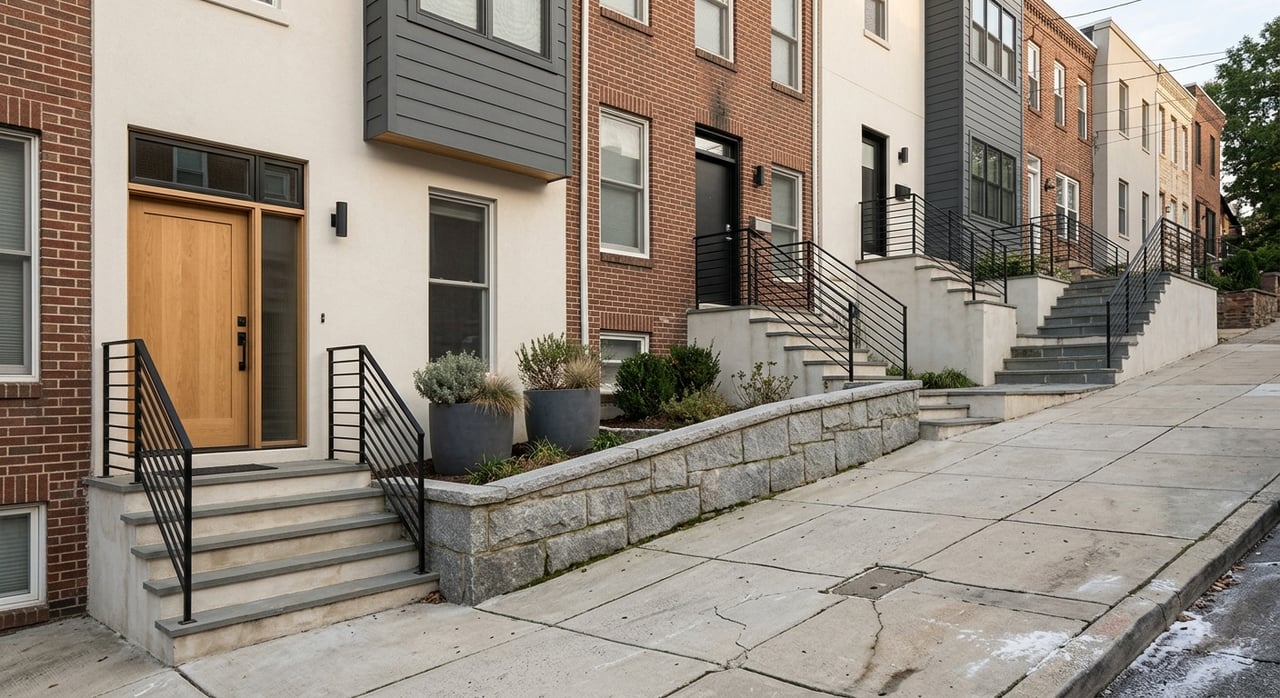
The biggest downside of a walk-up is obvious but important: stairs. That may not sound like a dealbreaker until you are carrying groceries, managing deliveries, moving furniture, or coming home tired at the end of the day. What feels manageable during a showing can feel very different once it becomes routine.
For some buyers, stairs are no big issue. For others, they are the deciding factor. It helps to think less about what you can tolerate and more about what you want to live with long term.
Smaller buildings may have fewer amenities and less formal management. That can be a positive if you want less structure, but a negative if you want a building that offers more support and convenience. There is no universally better option here, only a better fit for your needs.
If features like an elevator, dedicated parking, or more robust building services matter to you, a walk-up may feel limiting. If you would rather skip those costs, it may feel refreshingly straightforward. The right choice depends on how you define value.
When you look at a high-rise versus a walk-up in North Bergen, focus on the full monthly housing cost. The Consumer Financial Protection Bureau notes that a total monthly payment can include principal and interest, property taxes, mortgage insurance, homeowners insurance, supplemental insurance such as flood insurance, HOA fees, maintenance, and utilities. That full picture is what determines affordability.
It also helps to ask exactly what the monthly fee covers. Some condo fees include items like water, sewer, trash, common-area upkeep, and reserve funding. Others may be more limited, which can leave you paying more out of pocket elsewhere.
Use this checklist when comparing buildings in North Bergen:
These questions can tell you more than the listing photos ever will. A smart purchase is not just about the unit. It is about how the entire building functions over time.
If you want elevator access, more shared services, and the possibility of broader views, a high-rise may be the stronger fit. If you prefer a simpler building, fewer extras, and potentially lower monthly overhead, a walk-up or smaller building may be the better match. Neither option is automatically better. The best one is the one that supports your lifestyle and budget with the fewest surprises.
In North Bergen, that decision matters because building type affects both your day-to-day comfort and your long-term costs. If you are weighing options, it helps to look beyond finishes and focus on how the property will actually function for you. For tailored guidance on North Bergen condos, smaller buildings, and lifestyle-driven purchases across the Gold Coast, connect with Alena Ciccarelli.
Explore my latest insights, market trends, tips, and updates on real estate.

Whether you’re buying or selling, Alena Ciccarelli delivers exceptional service, local expertise, and a client-first approach that makes your real estate journey seamless and rewarding. If you want to get the highest value for your home, contact Alena for a free consultation!
Alena Ciccarelli
1412 Washington St Hoboken, NJ, 07030