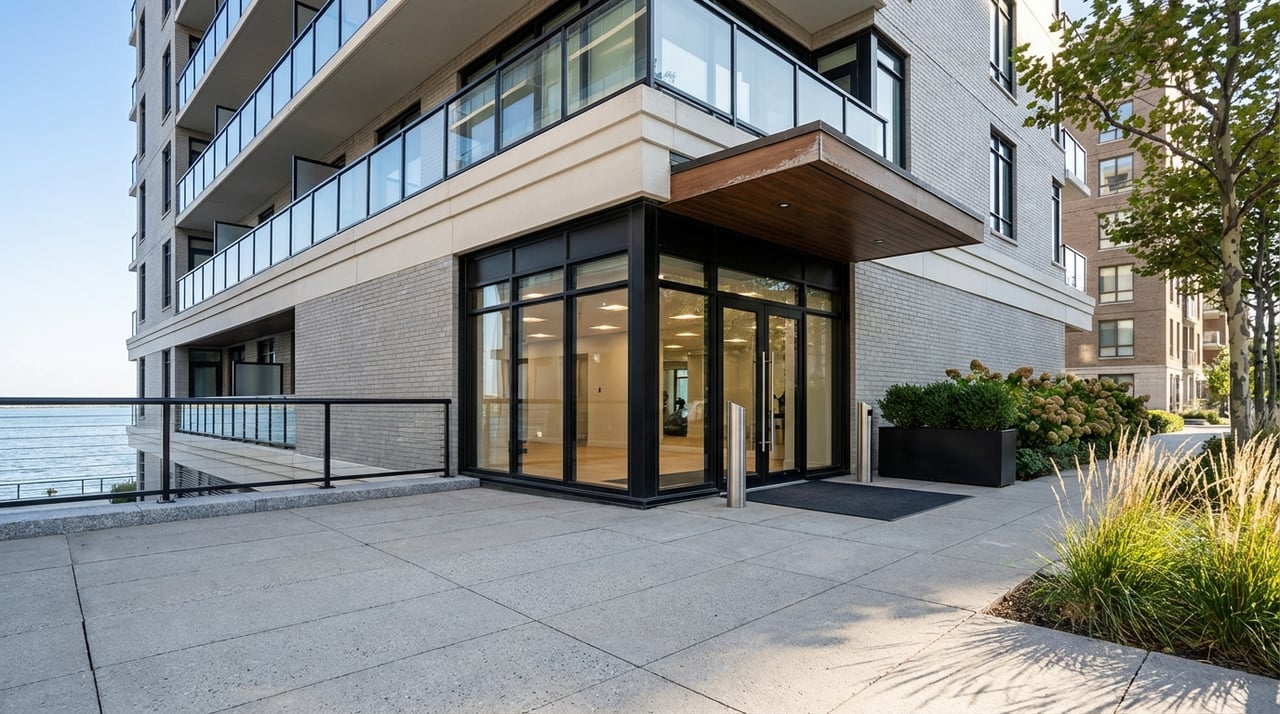
Buyer’s Guide to Weehawken Waterfront Condos
Picture yourself sipping coffee with the skyline right outside your window while your commute to Manhattan takes minutes by ferry. If you’re eyeing Weehawken’s Gold Coast, you want the views and the lifestyle, but you also want clear numbers and fewer surprises. In this guide, you’ll learn what drives pricing, which buildings to know, how HOA fees and insurance really work, and the commute options that make these condos so popular. You’ll also get a practical checklist to use before you tour. Let’s dive in.
Weehawken’s typical home value sits around the upper six figures. Zillow’s index for Jan 2026 is about $843,000, which helps you set expectations against nearby Gold Coast towns. Hoboken and Weehawken are similar at a high level, while parts of Jersey City and Edgewater often trend lower on broad medians. What matters most for you is waterfront versus non-waterfront and the exact building and exposure you choose.
On the Weehawken waterfront, listings at Lincoln Harbor and Port Imperial often range from the mid six figures to the low multimillion range. Recent examples show one to four bedrooms in the rough $600,000 to $3.5 million-plus spectrum. Price per square foot often climbs on newer, amenity-rich towers and on lines with direct skyline views. Your cost will depend on view, building age and condition, and whether parking or utilities are bundled.
Lincoln Harbor sits mid-waterfront with a marina, promenade, and a mix of pier-style and mid-rise buildings. Riva Pointe at 600 Harbor Boulevard is a well-known pier building with indoor pool, concierge, and a range of layouts. The appeal here is proximity to the marina and a quieter waterfront feel. For area context and the local mix of dining and open space, explore the official overview of Lincoln Harbor’s waterfront setting.
Port Imperial is the larger, newer, and more amenity-focused campus with an intermodal transit hub. The Avenue Collection buildings and RiverHouse residences are examples of the contemporary product here, with fitness centers, roof decks, lounges, pools, and on-site staff. The neighborhood continues to evolve, and projects like RiverHouse 9 highlight the scale and design of the district, as covered by New York YIMBY’s update on RiverHouse 9.
You can expect a strong amenity stack on the waterfront: 24/7 doorman or concierge, fitness centers, resident lounges and rooftops, pools, package rooms, and garage parking. Buildings close to the pier or marina sometimes offer private slips or preferred access. Newer towers often add co-working spaces and upgraded outdoor areas.
Monthly HOA or common charges vary by building, unit size, and amenities. Sample listing data shows Riva Pointe units with monthly fees in the mid-hundreds to low-thousands, and Avenue Collection units commonly in the roughly $1,100 to $1,900 range on one to three bedrooms. Larger homes, especially penthouses, can carry totals that rise steeply when you add taxes. Always model the full monthly picture before you fall in love with a view.
What fees usually cover: common area maintenance, building insurance on the master policy, staff, security, pool and amenity upkeep, and reserves. What may be extra: parking, storage, and certain utilities. Confirm whether parking is deeded or leased and whether your unit comes with a space.
New Jersey now requires structural integrity oversight and reserve planning for covered condo buildings. The 2023 law S2760, later refined by S3992, set schedules for inspections and reserve studies and allows specific funding pathways with added disclosures. Review the association’s current reserve study and the board’s adopted funding plan, and confirm timing for any required inspections. You can read the statute text for NJ S2760.
Reserve studies matter even more along the river. Waterfront buildings can face large-ticket items like bulkheads, façades, garage slabs, and elevator modernization. Underfunded reserves or recent special assessments change your real monthly cost. A concise explainer on New Jersey reserve expectations is available from PropFusion’s guide to reserve study requirements.
Understand the building’s insurance structure. Master policies can be bare-walls or all-in, which changes what you must insure. Most owners carry an HO-6 policy and add a loss assessment endorsement to protect against association deductibles. For a refresher on coverage basics, see this HO-6 overview. Ask for the master policy declarations page and the flood coverage details for common elements, and confirm any unit-level flood insurance requirements.
If you need FHA or VA financing, ask early about the building’s approval status. Buildings without active project approval can limit loan options or timing. For background on condo project approvals, review this condominium project approval and processing guide.
For flood risk, use FEMA’s official tool to pull the exact map panel and then compare it to the association’s insurer statement and claims history. Start with the FEMA Flood Map Service Center. This is especially important for pier or bulkhead buildings that may be in a Special Flood Hazard Area even if consumer tools show a low score.
Ferries define the Weehawken lifestyle. From Port Imperial and Lincoln Harbor, NY Waterway routes reach Midtown West and Downtown Manhattan in single-digit to low double-digit minutes, depending on landing. Schedules and terminal details are easy to review on NY Waterway’s Port Imperial page. Some landings offer free Manhattan shuttle buses that help you reach your final stop.
You also have the Hudson-Bergen Light Rail at Lincoln Harbor and Port Imperial, plus express buses like the 156, 158, and 159 to the Port Authority Bus Terminal. The Light Rail connects you to PATH, Hoboken, and Journal Square, which adds flexibility on days you skip the ferry. For station details, see the Lincoln Harbor Light Rail page.
If you drive, access to the Lincoln Tunnel is direct from the waterfront. Plan for peak-period tunnel traffic and Manhattan parking costs. Many residents alternate between ferry and bus to balance time, weather, and cost.
Use this list to get clarity on costs and risks before you tour or during attorney review. Request these from the seller’s agent or building management as part of the resale or estoppel packet.
Build a full monthly picture before you make an offer:
If you want an easy Manhattan commute without Manhattan prices, the Weehawken waterfront can deliver more square footage and amenities at a relative value compared to many city alternatives. Downsizers like the single-level living, elevators, and on-site services. Professionals appreciate the ferry, Light Rail, and flexible amenity spaces for work and hosting. Investors focus on newer, high-amenity buildings with strong commuter appeal and thoughtful reserve planning.
Ready to run numbers for a specific building or line with the view you want? Let’s narrow options by exposure, HOA structure, and commute fit, then arrange tours that match your timeline. If you want design guidance or renovation advice, you can tap into staging and project insight to help you buy with confidence. Arrange a Viewing with Alena Ciccarelli to get a tailored shortlist and a clear path forward.
Explore my latest insights, market trends, tips, and updates on real estate.

Whether you’re buying or selling, Alena Ciccarelli delivers exceptional service, local expertise, and a client-first approach that makes your real estate journey seamless and rewarding. If you want to get the highest value for your home, contact Alena for a free consultation!
Alena Ciccarelli
1412 Washington St Hoboken, NJ, 07030