Edgewater Waterfront Amenities Value: What Buyers Should Weigh
If you have looked at Edgewater waterfront condos, you have probably noticed one thing right away: two homes with similar views can come with very different monthly fees. That can make it hard to tell whether you are paying for real value, bundled costs, or amenities you may never use. The good news is that in Edgewater, amenities often do shape value in clear, practical ways. If you understand which features matter most in this market, you can compare buildings more confidently. Let’s dive in.
Edgewater’s waterfront market gives buyers plenty to compare. Recent portal data placed active inventory at roughly 79 to 87 homes, with median asking prices around $649,000 to $675,000 and median sale prices around $710,000 in spring 2026. In a market like that, buyers tend to look closely at monthly carrying costs, not just purchase price.
That is especially true on the waterfront, where the same neighborhood can include full-service buildings, more modest condo options, and co-op style maintenance structures that bundle very different expenses. A building with a higher monthly fee is not automatically overpriced. In many cases, the bigger question is whether the fee supports your daily life, commute, and long-term resale position.
In Edgewater, amenities are tied to how people actually live on the waterfront. The borough operates live ferry bus service with stops along River Road and City Place, and NJ Transit serves the waterfront corridor as well. Some buildings also market private ferry shuttle access, which means commute convenience becomes part of the value equation.
The borough’s planning documents also make clear that parking is not a small detail here. Edgewater has identified residential parking pressure and has emphasized the importance of on-site parking in development. That makes a garage space or deeded parking spot more than a nice extra. It can be a real value driver.
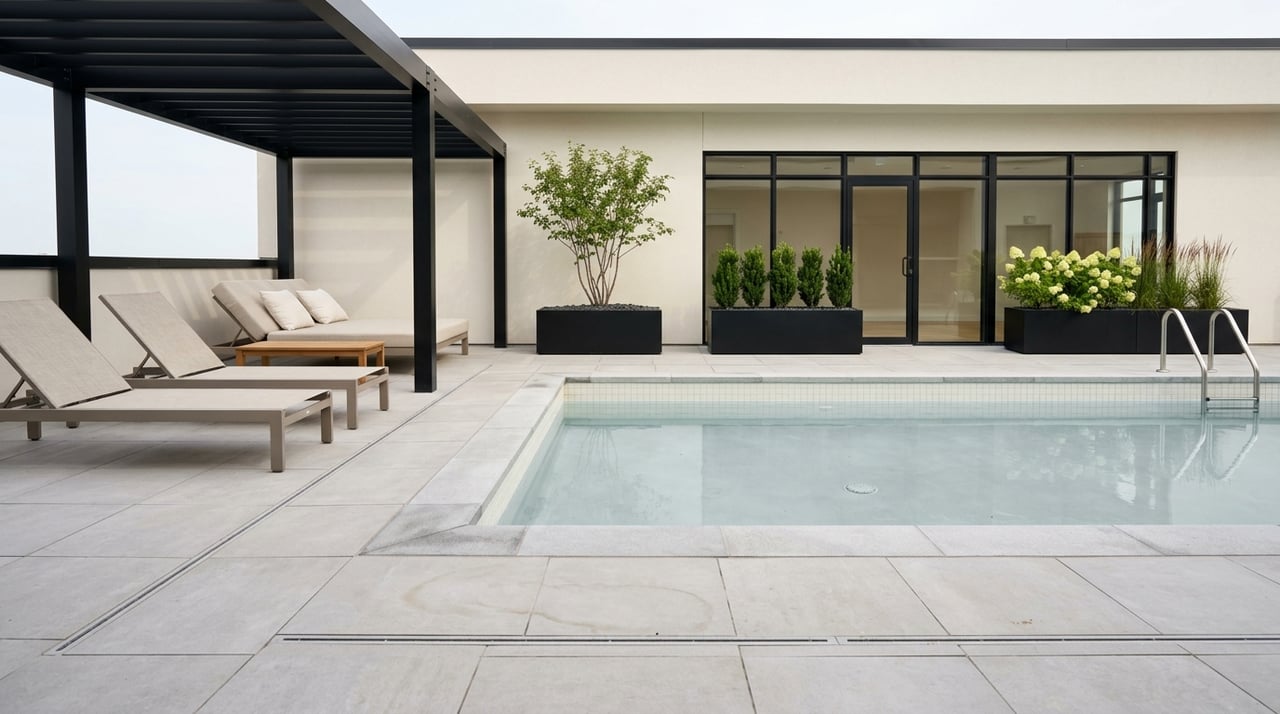
Some of Edgewater’s best-known waterfront buildings lean heavily into a lifestyle package. Edgewater Harbor, for example, markets features such as Riverwalk and private pier access, concierge service, fitness centers, skydecks, club rooms, and outdoor pools. These are the kinds of amenities that create a strong first impression and can support a premium when buyers see daily usefulness.
At The Pearl, current marketing and listing snapshots highlight a Manhattan-facing pool, fitness center, rooftop deck, and 24-hour concierge, with HOA dues around $836 per month. At Glass House, current listings show a more extensive package that can include a pool, rooftop deck, fitness center, private pier, terraces, and two indoor parking spaces, with HOA dues around $1,372 per month.
Admirals Walk offers another version of the full-service setup. Current listing details point to a gated waterfront community with an outdoor pool, barbecue and picnic area, tennis courts, basketball courts, fitness center, party room, and two parking spaces, with HOA dues around $1,222 per month. In buildings like these, you are paying for both the amenities themselves and the ongoing cost to maintain them.
Not every valuable amenity package has to feel resort-like. In Edgewater, some buildings offer a more practical mix centered on ease and access. That can be just as appealing, especially if your priorities are parking, concierge support, and a simpler daily routine.
City Place is a good example. Current listing snapshots show HOA dues around $783 per month and emphasize features like two on-site parking spaces, 24-hour concierge, garage parking, and street-level retail. For many buyers, that combination may feel more useful than a longer list of amenities they would rarely use.
One of the biggest mistakes buyers make is assuming lower HOA fees always mean better value. Sometimes lower monthly costs do reflect a leaner, more efficient building. Other times, they simply mean fewer services and fewer bundled expenses.
A River Road condo at 1100 River Road shows this contrast well. A current listing places HOA dues around $480 per month and highlights deeded parking, river views, and transit access at the building entrance. That may be very attractive if you want a waterfront location without paying for a large amenity stack.
This kind of option can work well for fee-conscious buyers who care more about view, location, and transportation than about a pool or club room. But it also shows why comparing buildings requires more than reading one number in a listing.
In Edgewater, the smartest way to compare waterfront buildings is to treat the monthly fee as part of your total carrying cost. That is because some buildings bundle much more than amenities alone. If you only compare HOA numbers side by side, you can miss the true cost picture.
Caribbean House is the clearest local example. A current listing shows monthly maintenance around $1,042, but that figure covers taxes, heat, gas, hot water, parking, cable, internet, and pool access. On paper, that number may look high compared with a building charging less each month, but the lower-fee building may require you to pay several of those costs separately.
That is why a so-called expensive building can sometimes be the more predictable option. The question is not just, “What is the fee?” The better question is, “What am I getting for that fee, and what would I still need to pay on top of it?”
In Edgewater, a few amenities appear to carry the strongest practical and resale value.
Because the borough has identified parking pressure, included parking matters. Garage spaces, deeded spots, or multiple on-site spaces can improve day-to-day convenience and make a home easier to resell. On the waterfront, parking often feels less like a perk and more like core infrastructure.
These features appear repeatedly in higher-service waterfront buildings. Buyers often place real value on services they notice every day, especially in buildings where package handling, guest access, and overall ease matter. Even when hard to price line by line, concierge and security can support the feeling of a more complete living experience.
Roof decks, shared terraces, riverwalk access, and private piers are central to Edgewater’s waterfront appeal. These are not just visual extras. They are usable spaces that can shape how often you enjoy the building itself.
A 2019 study in the Journal of Housing Markets and Analysis found that, in its sample, meeting rooms and external event-capable spaces were associated with higher resale prices. While that is not an Edgewater-specific measurement, it supports a practical takeaway for local buyers: usable shared outdoor and social spaces may be easier to defend in resale than purely decorative amenities.
These are common in the more amenity-heavy buildings and can help justify higher dues, but only if they fit your lifestyle. If you swim regularly or use an on-site gym several times a week, those features may create real value. If not, they may simply add to your monthly carry.
Included heat, hot water, cable, internet, taxes, or parking can materially change the math. In some waterfront buildings, the most valuable amenity is not flashy at all. It is cost transparency.
Amenities influence resale most when they match what future buyers in Edgewater are likely to care about. In this market, that often means a combination of parking, convenience, outdoor enjoyment, and commuting support. Buyers tend to respond to features that improve daily life, not just marketing photos.
That is why two buildings with similar finishes can perform differently. A polished lobby and sleek gym may help, but a buyer comparing monthly costs may place more weight on whether the building includes parking, supports an easy ferry or bus connection, and offers outdoor spaces that feel genuinely usable. In Edgewater, the practical premium often wins.
It is also worth remembering that amenity value can shift over time. Some features age well because they stay useful, while others become less compelling as buildings get older or maintenance costs rise. When you evaluate a building, think about which amenities are likely to remain relevant five or ten years from now.
On the Edgewater waterfront, amenities are part of a more complex ownership picture. The borough’s master plan has noted maintenance and security issues tied to the Hudson Riverfront Walkway, and Edgewater’s 2025 flood ordinance states that New Jersey flood hazard rules may be broader and more restrictive than FEMA’s Special Flood Hazard Area. That matters because waterfront ownership can come with added cost considerations beyond the visible amenity list.
For buyers, that means the view, pier access, or riverwalk setting should not be treated as free value. Buildings on the waterfront may face distinct maintenance, insurance, and regulatory pressures that affect monthly carrying costs over time. A beautiful amenity package is strongest when it is paired with clear financial transparency.
If you are choosing between Edgewater waterfront buildings, try looking at amenities through a daily-use lens instead of a luxury lens. Ask yourself which features you will use weekly, which ones truly improve convenience, and which ones may matter later when you sell.
A practical checklist can help:
For owner-occupants, the best amenities are often the ones that make your week easier. For investors, the focus shifts toward fee structure, rentability, and resale depth. In both cases, the goal is the same: understand whether the building’s monthly cost is buying you real, durable value.
In Edgewater, amenities shape value most when they solve real problems or improve everyday living. Parking, concierge support, outdoor space, and transit convenience often have the strongest case because buyers can feel their value immediately. Pools and fitness centers can matter too, but mainly when they match how you actually live.
That is why the smartest comparison is not luxury versus no luxury. It is usefulness versus cost. When you look at Edgewater waterfront buildings through that lens, you can make a clearer decision about which monthly fees are justified and which ones may not be.
If you want help comparing Edgewater waterfront buildings, evaluating monthly carrying costs, or identifying the features most likely to support resale, connect with Alena Ciccarelli for thoughtful, hands-on guidance.
Explore my latest insights, market trends, tips, and updates on real estate.

Whether you’re buying or selling, Alena Ciccarelli delivers exceptional service, local expertise, and a client-first approach that makes your real estate journey seamless and rewarding. If you want to get the highest value for your home, contact Alena for a free consultation!
Alena Ciccarelli
1412 Washington St Hoboken, NJ, 07030